
Hong Kong Mahjong rules (beginner guide)
If you’ve never played before, this is the shortest path to your first real game. We’ll keep it practical: what you do on your turn, what you can claim, what a winning hand looks like, and how basic fan scoring works in Hong Kong Mahjong.
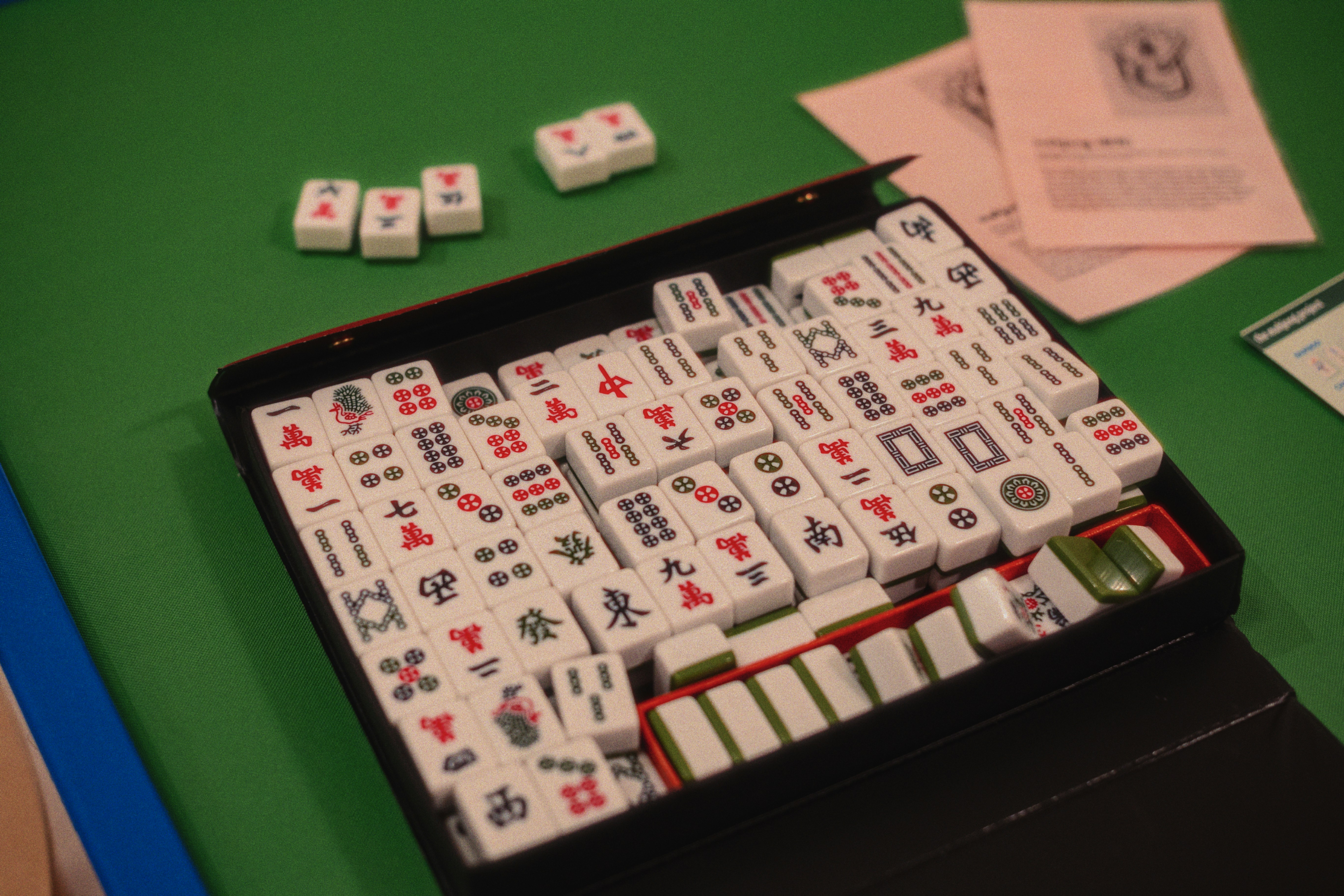
1) Tile categories (suits, honors, bonuses)
Hong Kong Mahjong uses three main tile categories. Most of your hand is built from suits and honors. Bonus tiles (flowers/seasons) are extra points and don’t form melds.
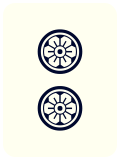
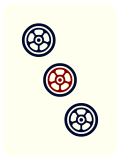
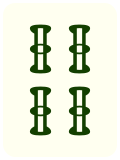
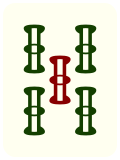
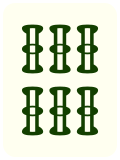
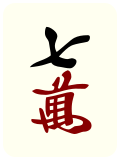
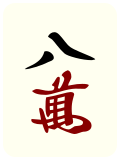
- Suit tiles (numbered 1–9, used for sequences and sets): Dots, Bamboo, Characters.
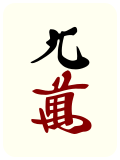
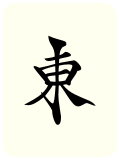
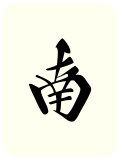
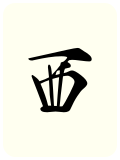
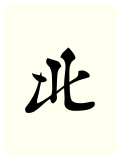
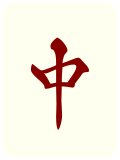
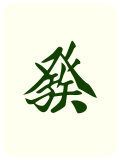
- Honor tiles (not numbered, used for sets only): Winds and Dragons.
- Bonus tiles (optional by table): Flowers and Seasons; usually you reveal them for a bonus and draw a replacement tile.

2) Basic hand goal: 4 melds + 1 pair
A standard winning hand is 4 melds + 1 pair (14 tiles total). A meld is a set of 3 (or 4) tiles: a chow (sequence), pung (three-of-a-kind), or kong (four-of-a-kind). The pair (two identical tiles) is often called the “eyes”.
3) Melds explained (chow, pung, kong)
These are the three meld types you’ll be forming constantly. Learn them once and the rest of the rules become much easier.
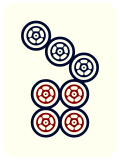
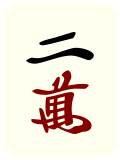
Tip: chows are usually easier to assemble early (especially with middle tiles like 3–7), while pungs/kongs are powerful for scoring but can make your hand more predictable if you call them openly.
4) Most common ways to form a winning hand (examples)
Below are beginner-friendly examples of how “4 melds + 1 pair” can look. These aren’t the only winning hands, but they’re the patterns you’ll see most often at Hong Kong Mahjong tables.
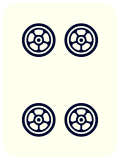
Example A: Mostly chows (sequence-heavy)
This style is common for beginners: build sequences in one or two suits and keep a simple pair.
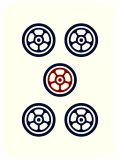
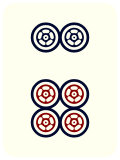
Example B: Mix of chows and pungs (very common)
One pung for stability, sequences for speed, and a simple pair.
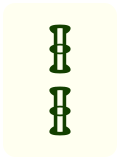
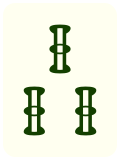
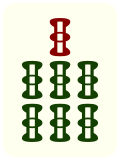
Example C: All pungs (higher fan, often meets minimum)
Four pungs + a pair. This is a classic “value” direction (but can be slower if you don’t get duplicates).
5) Fan counting (Hong Kong scoring basics)
In Hong Kong Mahjong, your winning hand must usually reach a minimum fan (often 3 fan) to be allowed to win. Fan values can vary by group, but the table below covers the most common “table-standard” patterns beginners run into.
Note: exact fan lists and minimum fan rules can differ between groups. If your table uses a “3 fan minimum”, a simple All Chows hand (often 1 fan) typically needs extra bonuses (like self-draw, flowers, or a dragon/seat wind pung) to be a legal win.
6) Your turn (every turn is the same)
- Draw one tile (unless you just claimed someone’s discard).
- Decide: can you win now? can you form/extend a kong? do you keep the tile?
- Discard one tile face-up to the discard area.
7) Claiming a discard: chow / pung / kong / win
- Chow: only the player to the left can chow, and only for suited sequences.
- Pung: anyone can pung if they have two matching tiles.
- Kong: anyone can kong if they have three matching tiles (rules vary by table).
- Win: if the discard completes your winning hand, you can declare Mahjong.
Many Hong Kong games enforce a minimum fan requirement (often “3 fan”), so you can’t win with an extremely low-value hand.
Quick checklist (beginners)
- Try to keep tiles that can become a sequence (2–8) longer than edge tiles (1,9).
- Don’t call (chow/pung) too early unless it helps you reach readiness quickly.
- When someone looks close to winning, stop feeding them: discard safer tiles.