Hong Kong Mahjong Scoring — Complete Faan Table
Faan (番) is the scoring unit in Hong Kong Mahjong. Each winning hand earns faan based on its composition — the more difficult or rare the pattern, the higher the faan value. Most tables require a minimum of 3 faan to declare a win, with a limit of 10 faan (maximum payout) at most modern tables — 8 or 13 at some.
Complete HK Mahjong Faan Scoring Chart
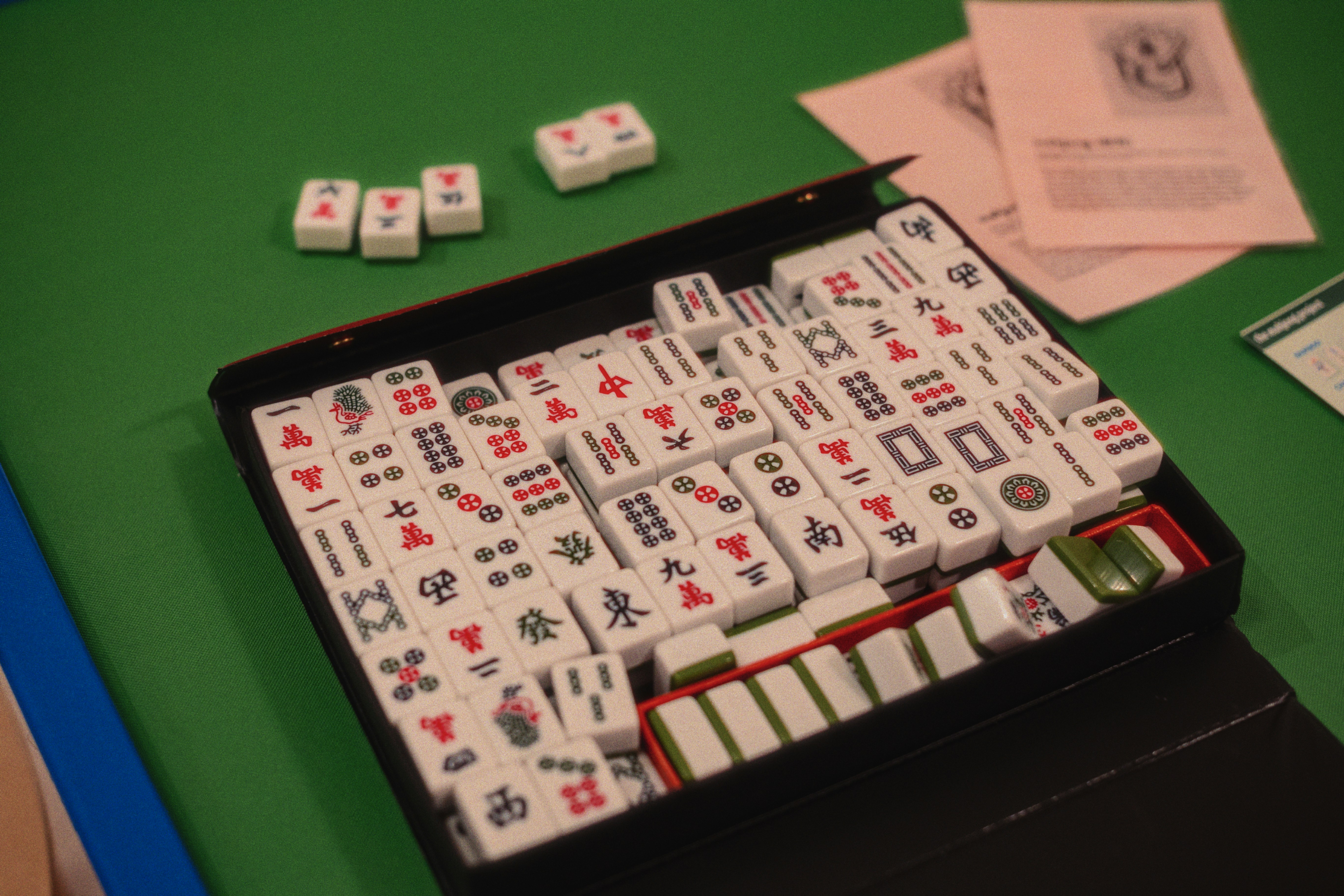
Below is the standard faan table used in most Hong Kong Mahjong games (the 新章 list). Faan values can be combined (e.g. Half Flush + All Pungs = 6 faan). Limit hands (例牌) are scored on their own and pay the table maximum. Rows marked as house rules are not standard and only count if your table agrees on them first. Click any hand name for a detailed guide — how to form it, common scoring mistakes, and which faan it combines with.
Want to try it? Start a free game now, no download. The game counts your faan for you when you win.
Play a free gameVisual Examples of Common Faan Hands
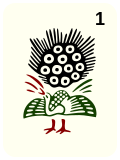
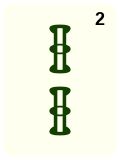
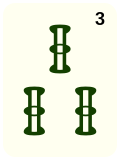
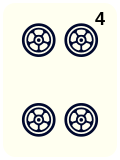
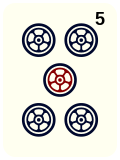
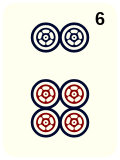
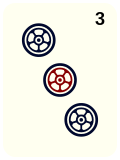
All Chows / Ping Wu (平胡) — 1 Faan
Four sequences plus a pair. The most basic winning hand.
 |
 |
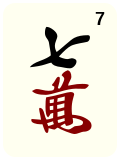
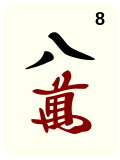
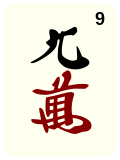 |

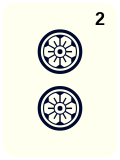
 |
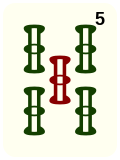
Half Flush / Mixed One Suit (混一色) — 3 Faan
All tiles from one suit plus honor tiles.
||
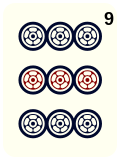 |
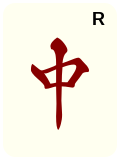 |
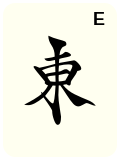
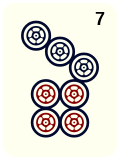
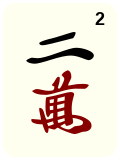
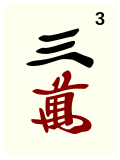
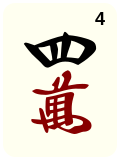
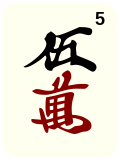
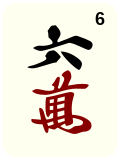
Full Flush / All One Suit (清一色) — 7 Faan
Every tile from a single suit — no honor tiles.
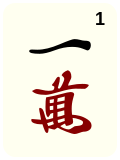
 |
 |||
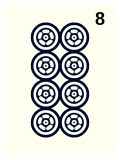
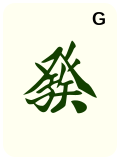
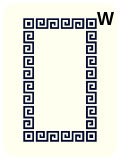
Great Three Dragons (大三元) — 8 Faan
Pungs or kongs of all three dragons.
| |
 |
 |
How Faan Scoring Works
When a player declares a winning hand, the total faan is calculated by adding up all applicable scoring elements. Multiple faan categories can stack — for example, an All Pungs hand in a single suit with one claimed pung combines All Pungs (3) + Full Flush (7) = 10 faan. The faan calculator does the counting for you.
How Many Faan Are Common Combinations?
Minimum Faan to Win
Most Hong Kong Mahjong groups play with a 3-faan minimum. This means you cannot declare a win unless your hand totals at least 3 faan. A simple All Chows hand (1 faan) would need additional scoring elements like a self-draw and a concealed hand (or a seat flower, at tables that play with flowers) to qualify.
Maximum / Limit Hands
Hands that reach the agreed-upon maximum pay the limit (爆棚) — the highest possible payout. Most modern Hong Kong tables cap at 10 faan; 8 and 13 are the other common choices. Limit hands (例牌) such as Thirteen Orphans, Great Four Winds and All Honours are scored on their own — nothing else stacks on them — and a 13-faan limit hand at a 10-faan table simply pays the 10-faan maximum.
Mahjong Point System: How Faan Become Points
Faan are converted into base points (基本點). Under the half-spicy scale (半辣上) standard in Hong Kong today, the base point doubles every faan up to 4 faan (1, 2, 4, 8, 16) and then every two faan (24, 32, 48, 64, 96, 128). A discard win is worth 4 base points — paid entirely by the discarder under the common full-gun rule (全銃) — and a self-draw 6 (2 from each player). So 3 faan is 8 base points: 32 points from the discarder, or 16 from each player on a self-draw. There is no dealer bonus. The payout calculator has the full table, full-spicy and half-gun variants, and optional stake conversion.
Frequently Asked Questions
How many faan do you need to win?
Most Hong Kong Mahjong tables require a minimum of 3 faan to declare a winning hand. Some casual games lower this to 1 faan, while competitive settings may use 5. Always agree on the minimum before the game starts.
What is the highest scoring hand?
The highest scoring hands are limit hands (例牌) that automatically pay the maximum: Thirteen Orphans (十三幺), Great Four Winds (大四喜), All Kongs (十八羅漢), Heavenly Hand (天糊) and Earthly Hand (地糊) are worth 13 faan; All Honours (字一色), Pure Terminals (清幺九) and Nine Gates (九蓮寶燈) are worth 10. At a table capped at 10 faan they all pay the same maximum.
Can faan values stack?
Yes — most faan categories are additive. A hand that qualifies for multiple scoring patterns has all applicable faan values summed together, up to the table's limit.