Thirteen Orphans (十三幺) — Limit Hand
Thirteen Orphans is a limit hand — it automatically pays the maximum, with no faan counting needed.
What it is
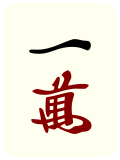
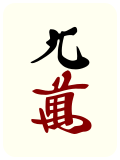
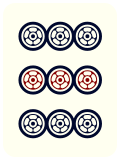
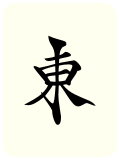
Thirteen Orphans is the most famous special hand in mahjong: one each of the 1 and 9 of all three suits (six tiles), one each of all seven honours (four winds, three dragons), plus a duplicate of any one of those thirteen as the pair — fourteen tiles in total. It has no meld structure at all, one of the few hands that breaks the "four melds plus a pair" rule.
How to form it
Only consider it when you’re dealt ten or more distinct terminals and honours. All thirteen tile types have to be collected in hand — no chows, no pungs — so everything comes from your own draws plus the winning tile. Once you hold all thirteen types, you’re on the famous thirteen-sided wait: any terminal or honour completes the hand, the widest wait in mahjong.
Example hand — Limit Hand

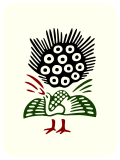
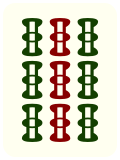 |
|
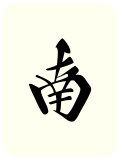
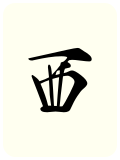
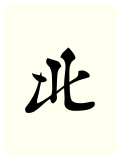
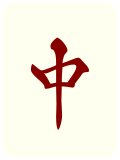
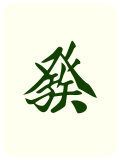
 |
|Common scoring mistake
You cannot claim chows, pungs or kongs at any point — the hand has no melds to build. And there’s no faan arithmetic to do: Thirteen Orphans is a limit hand, so it pays the maximum automatically and never stacks with other patterns.
Combines with
Thirteen Orphans is itself a limit hand — it already pays the cap, so nothing stacks on top.
Frequently asked questions
How many faan is Thirteen Orphans?
Thirteen Orphans is a limit hand — it pays the maximum payout automatically. At tables capped at 13 faan, it counts as 13 faan.
Can you claim pungs or chows for Thirteen Orphans?
No. The hand has no meld structure, so it must stay concealed throughout — only the final winning tile may come from a discard.
What is the thirteen-sided wait?
Holding one each of all thirteen terminal and honour types means any of the thirteen completes your pair — a thirteen-tile wait, the widest in mahjong.
Related hands
See how this hand fits into the complete scoring table: