
All Chows / Ping Wu (平胡) — 1 Faan
All Chows (Ping Wu) is worth 1 faan — all four melds are chows (sequences), with no pungs or kongs.
What it is
All Chows — Ping Wu (平胡) — is the most basic scoring hand in Hong Kong Mahjong: four sequences plus a pair. Sequences are the easiest melds to complete, which makes this the beginner’s most common win — and exactly why it’s worth only 1 faan.
How to form it
There’s no secret to building it: keep your partial sequences (like 4-5 of dots) and steer every meld toward a chow. The real skill is in the scoring — a bare All Chows is only 1 faan, which doesn’t clear a 3-faan minimum, so plan the extra faan before you commit.
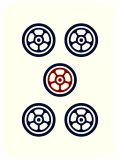
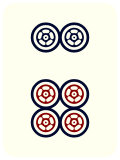
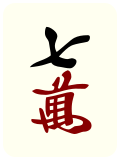
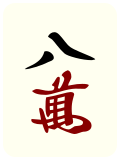
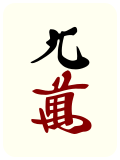
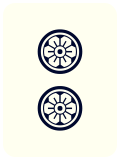
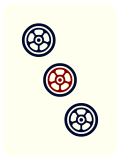
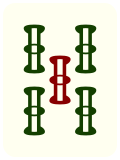
Example hand — 1 Faan
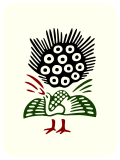
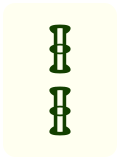
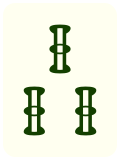 |
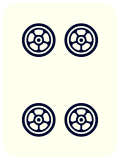
|
 |
|
 |
|
 |
|
Common scoring mistake
All Chows is not the same as "no faan at all" — a hand with zero faan is a chicken hand (雞糊, 0 faan). Ping Wu specifically requires all four melds to be sequences; one pung breaks it. At 3-faan-minimum tables, many beginners reach a ready hand only to discover a bare Ping Wu can’t win.
Combines with
All Chows most often reaches the 3-faan minimum via Self-Draw (+1) and Concealed Hand (+1). Combined with Full Flush it becomes 清一色平胡 — 7 + 1 = 8 faan, turning the humblest pattern into a big hand.
Frequently asked questions
How many faan is All Chows (Ping Wu)?
All Chows is worth 1 faan in Hong Kong Mahjong: all four melds are sequences plus a pair, with no pungs or kongs.
What is the difference between Ping Wu and a chicken hand?
Ping Wu has all four melds as chows and scores 1 faan. A chicken hand (雞糊) is any hand worth 0 faan — mixed melds with no scoring pattern at all.
How do you win with All Chows at a 3-faan minimum table?
Stack extra faan: All Chows (1) + Self-Draw (1) + Concealed Hand (1) is exactly 3 faan. Voided Suit or a dragon pung are other common toppers.
Related hands
See how this hand fits into the complete scoring table: